In a recent survey of more than 3000 small businesses in the leisure industry we asked the question …
What are the two or three things that concern you most in your business?
Not really surprisingly two of the top three were about customers namely …
- Not enough customers
- Not a regular supply of customers
- Not enough time to do everything
These were followed by many comments about cash flow, recruiting and keeping staff and the cost of advertising.
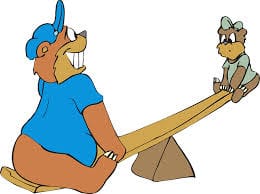
But a number of replies were concerned about the way big businesses use their size, budgets and influence to put the squeeze on small businesses.
So is competion fair?

One of the replies was from Nick Marshall who with his wife Lizzie has been running holiday rentals for nearly 25 years and owns Cairns Holiday Homes in North Queensland Australia.
Nick has seen lots of changes in this time and none moreso than the effect the Internet has had on his business and no doubt on many other small businesses
Here’s what he had to say..
Dear Cliff.
Thank you for the feedback regarding the effect of large corporate interests taking a huge bite out of holiday rentals for doing little more than listing properties.
This was bound to happen. The internet, in its early days at least, offered a far cheaper method for small businesses to potentially be seen. The only way that small business could advertise in the mass media was through the traditional media of the press, radio and tv. For most of us that meant small ads in the classified columns or, at much greater cost, taking out an ad in the weekend travel pages of a national newspaper.
Twenty five years ago that was costing me nearly A$300 per week. In Australia the “rivers of gold” as the Fairfax newspaper group’s weekend advertising columns were known was decimated by the swing to the internet and the rise of eBay and many other alternatives. Not surprisingly they took action and bought a site called Ozstays which became Stayz.
That site had been started as a listing site for holiday homes and apartments in 2001 but soon started listing hotels, motels and resorts – probably because the founders realised that the more listings they had, the more they could sell the site for. Stayz was purchased by Fairfax for about $12 million in 2005 and then sold to Homeaway for around A$220 but that included more than A$150 million of debt. Even so, it was a very good return on investment. Homeaway, which has grown by a string of worldwide takeovers, was after the 50,000 odd listings and gross margin that exceeded 56% in 2012.
None of this should surprise but I really do not see how these very large businesses can survive with their present business model. They are all actively trying to separate the supplier from the customer until after the booking has been made.
Unfortunately, the majority of holiday homes do not have a brand name (such as a hotel might have). Customers are taking a real risk when they book a home without the opportunity to talk to the managers or the owners.
The large sites like Homeaway, those operating under its name and AirBnB are expecting the public to trust their own brand name. Unfortunately, problems are happening ( trashing of properties, theft, prostitution etc) because none of these corporate sites are able to check out their clients. Flipkey is, I think, in a slightly better position because of its association with TripAdvisor which is the giant in customer feedback for all things to do with holidays.
Sure, these large listing sites do now attempt to verify ownership but their whole model is based on the owner or manager providing all the details of the property (copy, photographs, calendar data) when they list.
Homeaway recently passed 1 million listings worldwide and AirBnB has around 600 thousand listings.
With the amount of debt these corporations are carrying, there is no way that they can support their customers by providing a service that answers questions about individual properties. By preventing the pre-booking connection between the customer and the owner or manager, they are essentially saying “Trust Us!”
I do not think this will work because trust is breaking down everywhere at the moment. This provides an enormous opportunity for home owners and managers to get off their butts and build their own websites which will better serve their customers.
Of course, it is very hard to have a one property site which is going to be seen because the gateway is Google and there are only so many page one spots. Having said that, there are still many home owners who are not making use of Google Local for Business to be seen.
Property owners have to get together with other property owners in the same region or even the same suburb in large cities. Some areas already have well run websites specialising in that area. Support them.
Getting a good domain name is not as hard as it might seem. A name containing the name of the suburb, the village, the town, the region or sub-region or region is often available. Building a wordpress website is the easiest and least costly part. The hard bit is keeping the website updated and running an interesting, relevant and useful blog on the site to build up authority.
It is hard work and very time consuming. The days of list and forget are over – unless an owner wants to spend thousands more for elevated listing positions. It takes commitment and contribution by the owners to make it work.
Those who don’t take the plunge now will be lost in the listings. There is a wealth of good advice on the web – Matt Landau and Heather Bayer for example. This subject was touched on at the Vacation Rental World Summit this year. The cost of the webinar recordings is a small price to pay for the great advice offered.
The web is about doing it yourself rather than expecting others to do it for you.
Yours sincerely,
Nick Marshall
.
Some pretty insightful words from Nick not only about the effect of large businesses but also about the difficulties businesses of all sizes face in the rental property market, and some advice to owners and future owners of rental properties.
.
.
Christopher wrote …
.
First would definitely be the incursion by big captial into the highly successful realm of residential based accommodations industry. The folks behind the vast infusion of capital into the directory listing and booking parts of our industry are ill suited to support and cater to the actual needs of what started out as a bunch of Mom & Pop operations. We really don’t want or need corporate types telling us how to run our businesses. Yet their deep pockets have given them a strangle hold on a segment of the accommodations industry that is now being victimized by its success.
Another concern that is escalating is the prospect of increasing local government regulations, mostly being driven by major hotels who see our industry as a threat to their bottom line.
——————————–
Uwe-Dorte wrote …
.
Hi Cliff
Have enjoyed your tips and hints.
The travel and tourism industry is very competitive and as small businesses we are invariably stretched for time and in many cases don’t have the necessary skills to compete with bigger businesses.
As a very small business, The ups and downs during the year can be concerning. We are aiming to get a a more steady flow again.
We do not need to be crazy busy, but need steadiness. We are building it up getting more and more repeat divers.
We are sliding down our rank in Tripadvisor. We do encourage new divers to make a review. But having so many repeat divers coming several times a year for years, it is hard to expect them to continue putting on reviews after each visit. The bigger shops have bigger turnover and many more people writing reviews.
Am afraid I am not promoting what we do good enough.
.
So many thanks to Nick, Christopher and Uwe-Dorte for their feedback and to the many otheres who took time to reply to us. It is very much appreciated.
.
Cliff Chapman
.
If your businesses is being affected by “Big Business Practices” then we would love to hear from you.
.


 Follow