Eco Tourism Business Opportunities

Eco-Tourism Business Opportunities
Profitable Tourism That Protects Nature and Communities

Rasangi Ranadheera
26 December 2025

Eco-tourism is a fast-growing travel segment. Today’s travelers want meaningful experiences that respect nature, culture, and local communities. Eco-tourism businesses meet this demand while creating sustainable income and long-term value.

10 Key Eco-Tourism Business Opportunities

1. Nature-Based Accommodation
Eco-lodges, jungle cabanas, and village homestays offer simple comfort in natural settings with low environmental impact.

2. Community-Based Tourism Experiences
Village tours, cultural activities, and local storytelling allow communities to earn directly while preserving traditions.

3. Guided Nature and Wildlife Tours
Bird watching, hiking, forest walks, and wildlife tours led by trained local guides educate visitors and protect ecosystems.

4. Sustainable Adventure Tourism
Low-impact activities such as trekking, cycling, kayaking, and camping attract eco-conscious travelers.

5. Wellness and Nature Retreats
Yoga, meditation, and nature-based wellness programs combine relaxation with natural surroundings.

6. Eco-Friendly Transport Services
Bicycle tours, electric vehicle travel, and walking tours reduce pollution and improve the travel experience.

7. Local Food and Sustainable Dining
Farm-to-table cafés, organic meals, and traditional cooking experiences support local farmers and reduce waste.

8. Conservation and Environmental Education Tours
Mangrove walks, turtle conservation, forest restoration, and eco-education programs attract purpose-driven travelers.

9. Eco-Tourism Digital Services
Online booking platforms, eco-tour promotion, and digital storytelling support responsible travel businesses.

10. Sustainable Souvenirs and Local Products
Handmade crafts and natural products create income for artisans and meaningful memories for tourists.

Why Eco-Tourism Is a Smart Business Choice
• Attracts responsible, high-value travelers
• Supports local communities and jobs
• Protects nature and cultural heritage
• Builds strong trust and long-term demand
• Creates sustainable and resilient businesses

Eco-tourism proves that tourism can grow without destroying what makes it special.

Thanks to Rasangi Ranadheera
Orginally published in Linkedin in Dec 2025

Don’t pay to advertise – it’s free here in traveljunkies

Can Travel Be Social?

Can Travel Be Social?
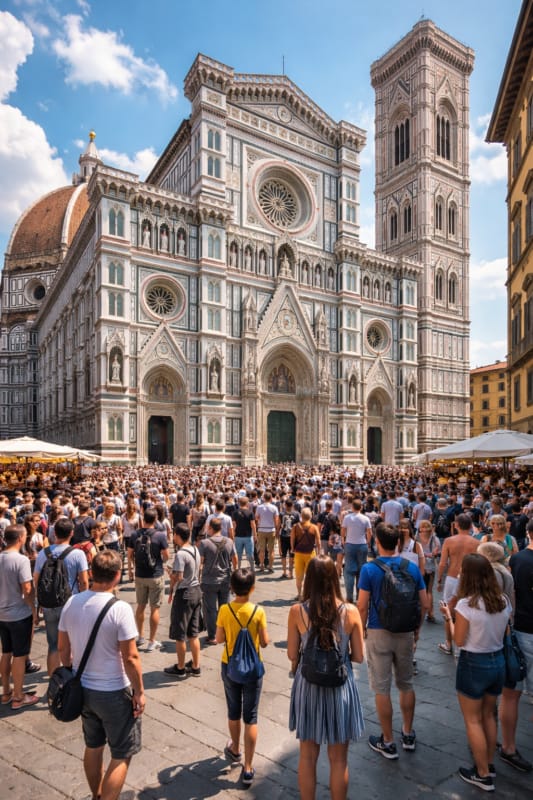
“Tourism in Florence is antisocial.”

That sentence caught my attention straight away. It came from someone who doesn’t usually talk in those terms, so I asked what he meant.

He talked about third spaces.

In many European cities, piazzas aren’t just tourist sights. They’ve always been everyday spaces. Places where people meet friends, argue about politics, watch life go by, or simply sit without needing to buy anything. They’re not decorations. They’re part of daily life.

Tourism, he suggested, becomes a problem when these spaces stop working for the people who live there.

Florence is often described as an open-air museum, but its art was never meant to be passive. Paintings, statues, and buildings once had clear roles in public life. They carried ideas, beliefs, and shared meaning. Art helped shape how people understood their city and their place in it.

Today, many of Florence’s main squares feel different. They’re still beautiful, but often crowded, expensive, and focused on visitors. Locals pass through rather than linger. When a space is designed mainly for consumption, everyday life slowly steps aside.

This isn’t unique to Florence. Tourism often searches for “authentic” places, but too much attention can quietly change how those places work.

So what can be done?

One idea is that cities need stronger, more balanced economies. When most jobs depend on visitors, it becomes harder for residents to make choices based on their own needs. Culture turns into something that must be sold, rather than lived.

You can see this imbalance in small details. A few famous museums are overwhelmed, while others—equally public and meaningful—remain calm, underfunded, or partly closed. Attention and resources concentrate in predictable places.

Travelers also play a role. Travel works best as an exchange, not a demand. Wanting to understand a place is different from expecting access to its daily life. The more we chase a “local experience” as a product, the more distant it can become.

Cities don’t suddenly fall apart. They slowly lose their texture.

So maybe the question isn’t whether tourism is good or bad. Maybe it’s softer than that:
can travel leave enough room for places to keep being themselves, in everyday, ordinary ways?

#SustainableTravel

Thanks to an original article by Sara Ensing on Linkedin

Still Struggling

Are you B2C or B2B?
Still trying to decide?
You probably don’t need to.
Most travel businesses are both.

B2C = travellers, holidaymakers, explorers.
Fast results. Enquiries. Bookings.
But it usually needs constant advertising.

B2B = connections, partners, other businesses.
Slower burn. Stronger foundations.
Build trust, gain referrals, long-term growth.

That’s B2C & B2B in a nutshell.

B2C gives you momentum connecting with lots of customers.
B2B gives you stability by building relationships.
Both need each other & together, they work better.

Instead of only promoting your business, promote:
– where you are
– what else is there
– who else is there
– why you should visit

Do this and you stop sounding like an advert and start sounding like a local.
Locals get trusted.

And don’t start by choosing your “ideal customer.”
Build visibility first.
Then find your ideal customers.

This is how Traveljunkies works for travellers and for small businesses.

👉 If you run a travel, leisure or hospitality business and want more visibility, stronger partnerships, and better leads, start using Traveljunkies properly.
Your listing does both, but depends how you use it.
List your business. Connect locally. Grow smarter.

Don’t pay to advertise – it’s free here in traveljunkies

Changes to Instagram. Hotels need to pay attention.

Instagram just dropped a huge update and hotels need to pay attention.

No alternative text description for this image
You can now reshare any public Story straight into your own Story. This is bigger than most people realize. Instagram just made it easier for hotels to amplify real guest moments in real time, which is the single most trusted form of marketing in travel.
This isn’t a small update. This is a distribution shift that hands hotels a new way to scale social proof instantly.

Here’s why it matters. Travelers trust travelers. Always have, always will. When a guest tags your hotel, that Story used to disappear in a few hours unless you screenshotted it or begged them for the file. Now you can extend its life, spotlight it, and turn it into an always on engine of credibility. Every guest becomes part of your marketing. And honest truth, that’s what the industry has needed for years.

This is also the first time in a long time that Instagram has given hotels a feature that rewards participation instead of perfection. The hotels that move fast will build momentum. The ones who sleep on it will keep wondering why their engagement feels stale.

Here are tactical moves hotels can start TODAY:

1. Create a daily Story roundup that celebrates guest content. This instantly boosts community engagement and conditions guests to tag you more often.

2. Train front facing staff to kindly remind guests to tag the hotel when they see them filming. Guests love when their content gets amplified, and this drives more organic visibility.

3. Build a “Guest Spotlight” highlight and update it daily. Make it the first highlight on your profile so travelers feel the property’s energy through real experiences.

4. Turn this into a loyalty touchpoint. When you reshare a guest Story, DM them a warm thank you and offer a small perk for their next stay. Micro gestures build macro loyalty when you do them consistently.

5. Use this feature during events, weddings, conferences, and property activations. You’ll create a live content wave that makes your hotel feel active, relevant, and worth booking.

Here’s the truth. Social media is moving toward raw, real, and participatory content, and this update leans right into that shift. Hotels that understand how to use guest Stories as a credibility engine will outperform the ones who still rely on polished campaigns alone. This is the moment to act.

If you like the way I look at the world of hospitality, let’s chat: scott@mrscotteddy.com

Wrong Email Address

Is your email address out of date?

Can’t Be Delivered

The mailing company I use has blocked some of my customers because our mail can’t be delivered.
The main cause has turned out to be the customers have changed their email address in the past and not told us.
So if you have a listing in www.traveljunkies.com please check your email address is currently valid.
If not, let me know
Thanks
Cliff

#email  #notdelivered  #outofdate  #wrongemailaddress

About Traveljunkies

Traveljunkies and travel junkies

It was a bright, sunlit morning in 2003 when four young women, their heavy backpacks slung over their shoulders, rolled up to our small desk on Dunk Island in far north Queensland, Australia. Their laughter carried across the jetty as they introduced themselves with easy smiles and unmistakable American accents.

“We wanna go jet skiing,” they said, brimming with the kind of fearless energy only true adventurers bring.

“Great,” Joe replied. “Who are you, and what are you doing in Oz?”

With grins as wide as the horizon, one of them shot back: “We’re travel junkies going round Australia and New Zealand.”

That simple, spontaneous answer did more than make us laugh, it painted a picture. It captured the essence of restless wanderers chasing adventure, collecting stories, and finding joy in faraway places. And just a few weeks later, it gave birth to a name: Traveljunkies.

Traveljunkies: A business born from resilience

Traveljunkies.com began not as a carefully crafted startup, but as a practical response to crisis. After a cyclone tore through Mission Beach and the surrounding communities, local tourism operators faced devastation. Boats were gone, accommodations were damaged, and livelihoods were suddenly uncertain. Yet one thing remained strong: the determination of small business owners who refused to give up.

Traveljunkies was created to shine a light on those businesses. We set out to connect travelers with local tour operators, family-run accommodations, adventure guides, and passionate hosts who simply wanted to keep sharing their corner of paradise with the world. The idea was simple: put small operators on the map, make them visible, and help them welcome back the travelers they depended on.

From those beginnings in far north Queensland, Traveljunkies has grown into a global platform. Today, we support small and emerging businesses in the travel, tourism, and hospitality sectors around the world. Whether it’s a boutique guesthouse in Greece, a surf school in Costa Rica, a dive operator in the Philippines, or a community lodge in Kenya, we champion the entrepreneurs who bring authenticity, sustainability, and heart to their work.

Travel junkies: the spirit of adventure

While Traveljunkies supports small businesses, travel junkies are the people who inspired our name. They are the explorers who set out with little more than a backpack and an appetite for discovery. They are the divers chasing coral reefs at dawn, the trekkers following mountain trails, the surfers searching for waves, and the curious souls eager to taste local food at a family-run café.

Travel junkies aren’t just looking for landmarks, they’re looking for experiences. And when they find them, they share them. A single traveller posting about a hidden island tour or a night dive can bring a wave of visitors to a small operator who might otherwise struggle to be noticed.

They bring something else too: resilience. Time and again, it’s the flow of travel junkies, backpackers, digital nomads and adventure seekers that help small businesses bounce back after natural disasters, political challenges, or global downturns. They spend where it matters, directly with the businesses on the ground.

Where business meets passion.

On that day on Dunk Island in 2003, four backpackers reminded us that tourism is, at its heart, about people. Their phrase, “we’re travel junkies” encapsulated both the hunger of travelers for authentic adventure and the lifeblood of the small businesses that host them.

And that’s what Traveljunkies continues to stand for. We are a business that exists to amplify the voices of small operators in travel, tourism, and hospitality. We help connect them to the travelers who value authenticity, personal service, and genuine connection. We believe the future of travel belongs not to the biggest players, but to the boldest dreamers, the entrepreneurs who take risks, care for their communities, and offer experiences you simply can’t find anywhere else.

An invitation to small business owners

If you run a small or emerging business in travel, tourism or hospitality, this is your story too. You know the challenges of competing with global giants, of keeping your doors open in uncertain times, of wearing every hat in the business. You also know the joy of welcoming guests, the pride of sharing your local culture, and the satisfaction of seeing travelers leave with memories they’ll carry for a lifetime.

Traveljunkies is here for you. We are your platform, your advocate, and your connector to the very people who inspired our name, the travel junkies of the world. Because they are still out there, backpacks on, ready to walk up to your desk, your boat, your lodge, your café, and say: “We wanna go.”

What next?

We invite small and emerging travel, tourism, and hospitality businesses to join us with a completely free listing in our global travel & adventure directory at www.traveljunkies.com.
No fees, no time limit, just a genuine opportunity to connect with the travel junkies of the world.

The only question is: will you be ready to say, “Great, who are you, and what are you doing in our corner of the world?”

You can display your business listing here – it’s free.

Warm welcome.

Cliff Chapman
Traveljunkies

You can easily find us. Traveljunkies is on Google Page 1.

Small Adventure, Travel & Hospitality Businesses.

Small Wonders: How Independent Travel Businesses Are Redefining Adventure

In a world where travel has become a global industry, dominated by multinational tour operators and mass-market itineraries, it’s easy to forget that the beating heart of tourism lies elsewhere. Away from the bright lights of mega-resorts and the conveyor belt of crowded coach tours, a different kind of travel is flourishing—quietly, passionately, and with extraordinary impact.

These are the small and emerging businesses: family-run guesthouses in the Andes, dive operators on remote islands, eco-camps in African savannahs, trekking guides in the Himalayas. Each one is a story of belief, of people who wake up every day convinced that travel can be something deeper and more meaningful than ticking boxes on a brochure.

For these entrepreneurs and workers, their businesses are not just livelihoods—they are lifelines. They see themselves as custodians of place, culture, and environment. They are not driven by scale but by purpose: the joy of sharing their world with others, the pride of crafting journeys that leave both traveller and host richer for the encounter.

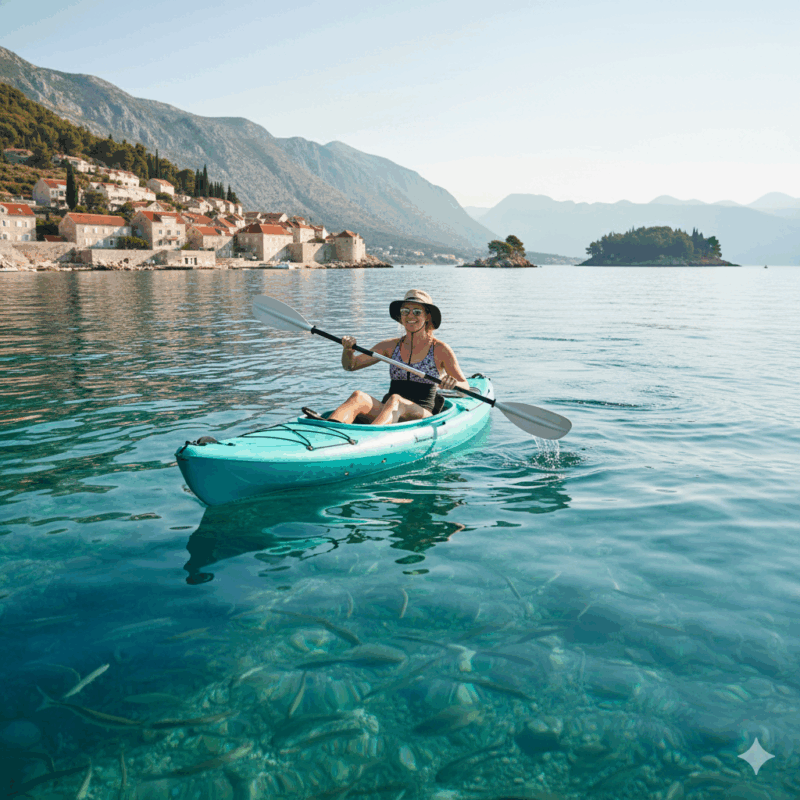
Take, for example, a young couple running a kayak outfit in Croatia. They know every bend of the coastline, every hidden cave, every quiet beach the big boats will never reach. Their tours rarely exceed a handful of guests, and that intimacy means more than just a quieter paddle. It’s the chance to share folklore, family recipes, and the rhythm of daily life along the Adriatic—details no package itinerary could hope to capture.


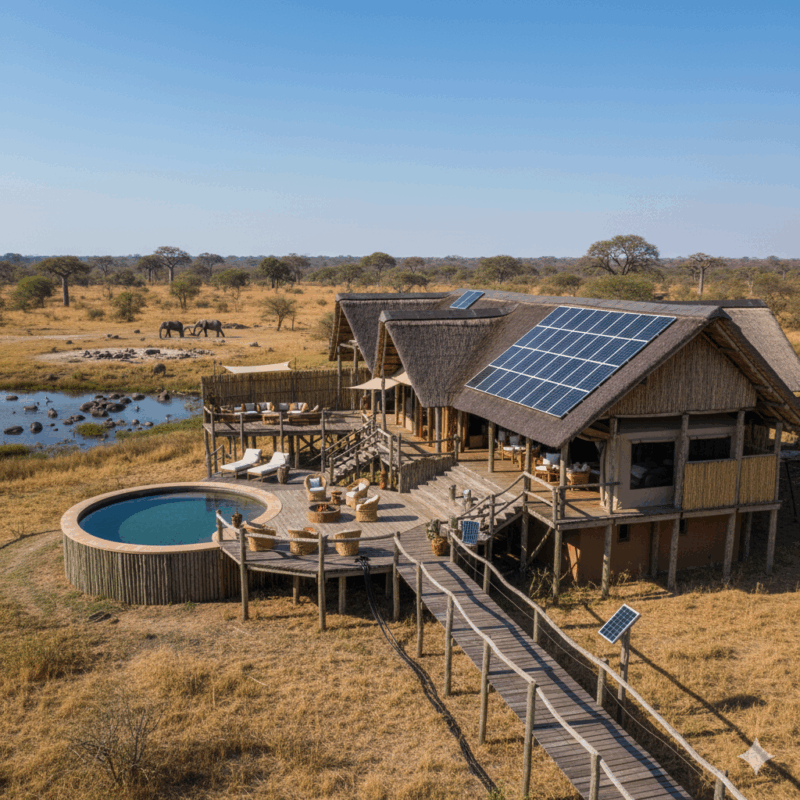
Or consider a safari camp in Botswana powered by solar, built with local materials, and staffed by community members. For the owners, sustainability isn’t a marketing buzzword—it is a non-negotiable principle. Their business model ensures wildlife is protected, jobs are created locally, and guests walk away with an experience that feels authentic, ethical, and unforgettably personal.


These businesses operate with passion as their currency. Where large companies streamline and standardise, small operators innovate and personalise. Where global players herd crowds to already congested landmarks, local guides find ways to disperse travellers, to reveal the hidden, the unspoiled, the delicate.

It is here that the contrast becomes sharpest. The big brands pride themselves on efficiency—flying thousands of travellers to the same beaches, lining them up at the same monuments, selling the same “bucket list” products. The result is often over-tourism: coral reefs choked by too many snorkelers, ancient streets worn down by endless tour groups, fragile ecosystems strained beyond their limits.

Small businesses, on the other hand, often make a virtue of restraint. Fewer guests, smaller groups, slower travel. They know that by keeping experiences intimate, they protect the very environments and cultures that attract visitors in the first place. They understand that a traveller’s most powerful memory is not likely to be standing in line at an overcrowded landmark, but sitting around a kitchen table with a family, hearing stories that don’t appear in guidebooks.

This is not nostalgia. It is a conscious reimagining of what travel can be—and must be—if it is to remain a force for good. Small and emerging businesses are showing that economic viability and environmental responsibility can coexist, that tourism can regenerate rather than deplete. They are reshaping the industry from the ground up, quietly but powerfully, one unforgettable journey at a time.

For discerning travellers, the invitation is clear. Beyond the glossy brochures and the packaged tours lies a richer world of experiences—crafted by people who care deeply, not only about your adventure, but about their communities and the planet we all share. Choosing to travel with them is more than a consumer choice. It is a statement of values, a commitment to a kind of tourism that honours place, people, and planet.

Because the truth is, the future of travel won’t be decided in boardrooms of global corporations. It will be written in the sandy footprints left by a handful of guests on a remote island, in the smiles of villagers who see tourism uplifting their community, in the quiet determination of small business owners who believe, against the odds, that travel can still change the world for the better.

18 travelling tips – from someone who travels all the time.

Great advice from a guy who’s spends his whole life travelling.

“Twelve years ago I sold everything I owned. No house, no car, nothing. I moved into hotels and cruise ships full-time and I’ve been traveling ever since. Before that I lived in Europe and Asia for 17 years in six different countries. Now I spend my life on the road, visiting 15-20 countries a year, and after thousands of nights in hotels and countless flights, I’ve learned a few things about how to make travel less stressful and a whole lot smoother.”

“These are not theories, these are the things I do on every single trip. If you travel often, or you know someone who does, share this list. It will save time, money, and headaches.”

1. Take pictures of tickets, luggage tags, and all important documents. If your luggage gets lost, that picture will be your best friend.

2. Pack comfort items in your carry-on. You never know when a flight gets delayed or you’re stuck in an airport overnight.

3. Shred your luggage tags when you take them off. Those barcodes hold more personal info than you think and scammers know it. And don’t EVER throw them away in public places.

4. Always pack your manners. Travel is stressful enough, and kindness goes further than anything else.

5. Use headphones on your phone or when watching videos. Nobody wants to hear your video call!!

6. If you’re sick, wear a mask. It’s not about you, it’s about everyone else.

7. Put an AirTag or SmartTag in your checked luggage so you can track them.

8. Carry wipes and clean your seat area. That tray table is one of the dirtiest surfaces you’ll touch.

9. Have your travel apps updated and notifications turned on. A five-minute heads-up on a gate change can save you a sprint across the airport.

10. Bring a power bank. Dead batteries are the enemy of a smooth trip.

11. Download offline maps. Wi-Fi is not guaranteed.

12. Pack snacks. Airport food is expensive and airplane food is hit or miss.

13. Notify your bank before traveling so your card doesn’t get blocked abroad.

14. Always learn a few words in the local language. A simple hello and thank you can change the way locals treat you.

15. Sign up for Global Entry and TSA PreCheck to save time.

16. Put your phone on silent and in airplane mode when flying or cruising. Saves you money and shows respect to others.

17. Carry a reusable water bottle and use airport refill stations.

18. Use Google Lens for translation. It’s a game-changer in foreign countries.

I could go on and on, but the point is this, travel doesn’t have to be a nightmare. With the right habits, it becomes a rhythm, almost second nature.

Thanks to Scott Eddy
https://www.linkedin.com/in/mrscotteddy/

Our Traveljunkies Blog

Not using this Blog? Do you even know we’ve got one?

If you don’t know we have a Blog, it’s my fault for not promoting it enough.

The Traveljunkies Blog has been around for more years than we can remember and has helped thousands of small businesses in the travel, tourism and hospitality sectors with guides, marketing articles and hints & tips.
Many of the positive comments in our testimonials in Traveljunkies.com refer to help and advice posted in this Blog

We’ve kept it separate from our main Traveljunkies site to focus on what’s important for our customers.

So if this is the first time you’ve found us, I’m hoping you’ll find it useful in building and growing your business.

Some of the articles we post to our customers in our monthly newsletter are also posted here, so if it’s new to you, please try it and we hope you’ll find as useful as our customers do.

Let us know what you think and what else would be valuable to you.

Thank you

Cliff Chapman
Traveljunkies

Marketing Secrets For Small Businesses

Marketing Secrets For Small Businesses

Small businesses have big dreams, and with the right marketing secrets, those dreams can turn into success stories. In this post, we’ll walk through five simple sections packed with practical tips to help you grow your business online. Let’s dive in!


Homepage: Your First Impression

Your homepage is your front door. Every visitor judging whether to stay or go depends on how well it welcomes them. Here’s what works:

  • Clear headline – Tell them exactly who you serve and how. (“Helping local florists bloom online.”)
  • Concise benefits – Use short benefit bullets with icons to highlight what makes you unique.
  • Simple navigation – Make it effortless for people to explore, services, success stories, building trust.
  • Strong call-to-action – Invite them to something valuable: “Get your free website”

Tip: Keep it clean and focused, too many options overwhelm!

Landing Pages: Convert Curious Visitors

A good landing page turns a visitor into a lead. The goal? Keep them focused on one action.

  • Single call-to-action – Make their next step crystal clear (“Get your free advert”).
  • Compelling subhead – Expand on the headline with a clear benefit.
  • Visual proof – Add testimonials, logos, or screenshots to build trust.
  • Minimal navigation – Remove distractions, keep people focused on the offer.

Pro Tip: Run A/B tests on headlines or button colors to see what gets clicks!

Taglines: Quick Branding Wins

Perfect taglines are short, punchy, and memorable, they stick in your audience’s mind.

  • Keep it under short – Make sure it’s easy to read and recall.
  • Focus on a benefit or emotion – “Making small brands shine online.”
  • Use rhythm or contrast – Catchy, poetic lines have more impact.

Try this: Write 10 options, test with real people, and pick the one that sticks best!

Referrals: Let Your Fans Do the Talking

Happy customers are your best marketers. A strong referral program turns fans into promoters.

  • Offer a reward – Give them something valuable (discount, free service, etc.).
  • Make it easy – One-click “share with a friend” tools go a long way.
  • Track referrals – Know who referred whom so you can follow up and reward accordingly.

Why: Your “Why” page shows the heart behind your brand, and that emotional connection matters.

  • Share your story – What inspired you to start the business?
  • Highlight your values – Why you do things differently (e.g., eco-friendly, supporting local).
  • Feature your team or culture – Photos of real people help visitors connect.

Remember: Trust is built through authenticity. Let potential customers feel the passion behind your work.

Build Your Marketing Powerhouse 🚀

Every piece on your site supports a larger ecosystem:

  1. Homepage draws people in.
  2. Landing pages help convert them.
  3. Taglines make your brand memorable.
  4. Referrals create customer-driven growth.
  5. Your “Why” page builds authentic connection.

Start by giving each page one small upgrade, maybe tighten your tagline, add testimonials to a landing page, or simplify your homepage.
Over time, these small tweaks add up to a powerful marketing machine.

# marketing #traveljunkies #free