My Top 10 Caribbean Beaches

Noelfy Langamen has been travelling the world on board ships and in the air for the past 8 years and here are her favourite Caribbean beaches . . .

“Hard to choose among all of them, any of them has something special that I love. There are not listed in any special order:”
.
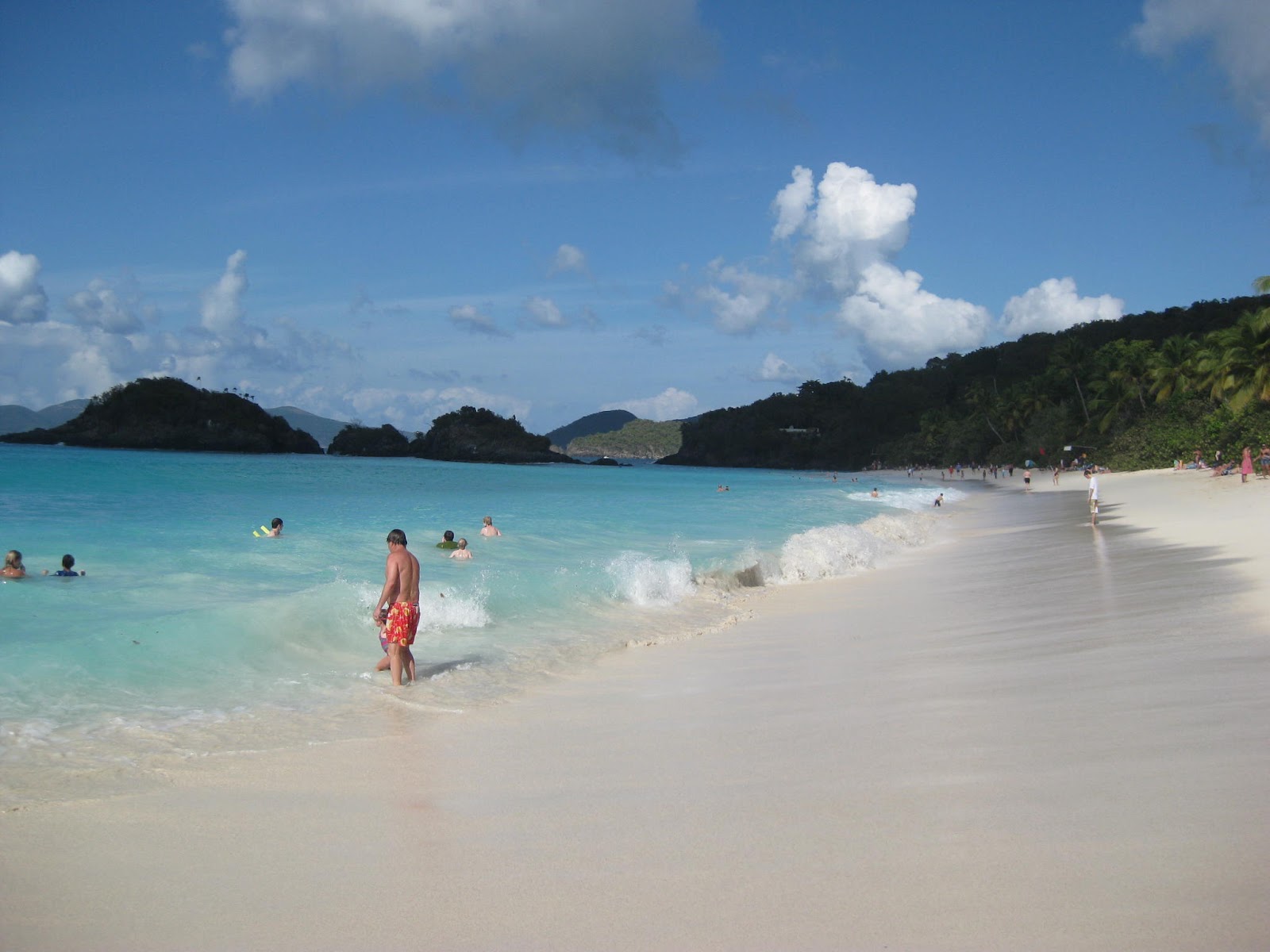
1.- Trunk Bay, US Virgin Islands: Official one of the Top 10 beaches of the world, any of the photos I took really reflect this fact. Located inside a natural park, represent one of the best beaches to be in contact with both nature and sea.

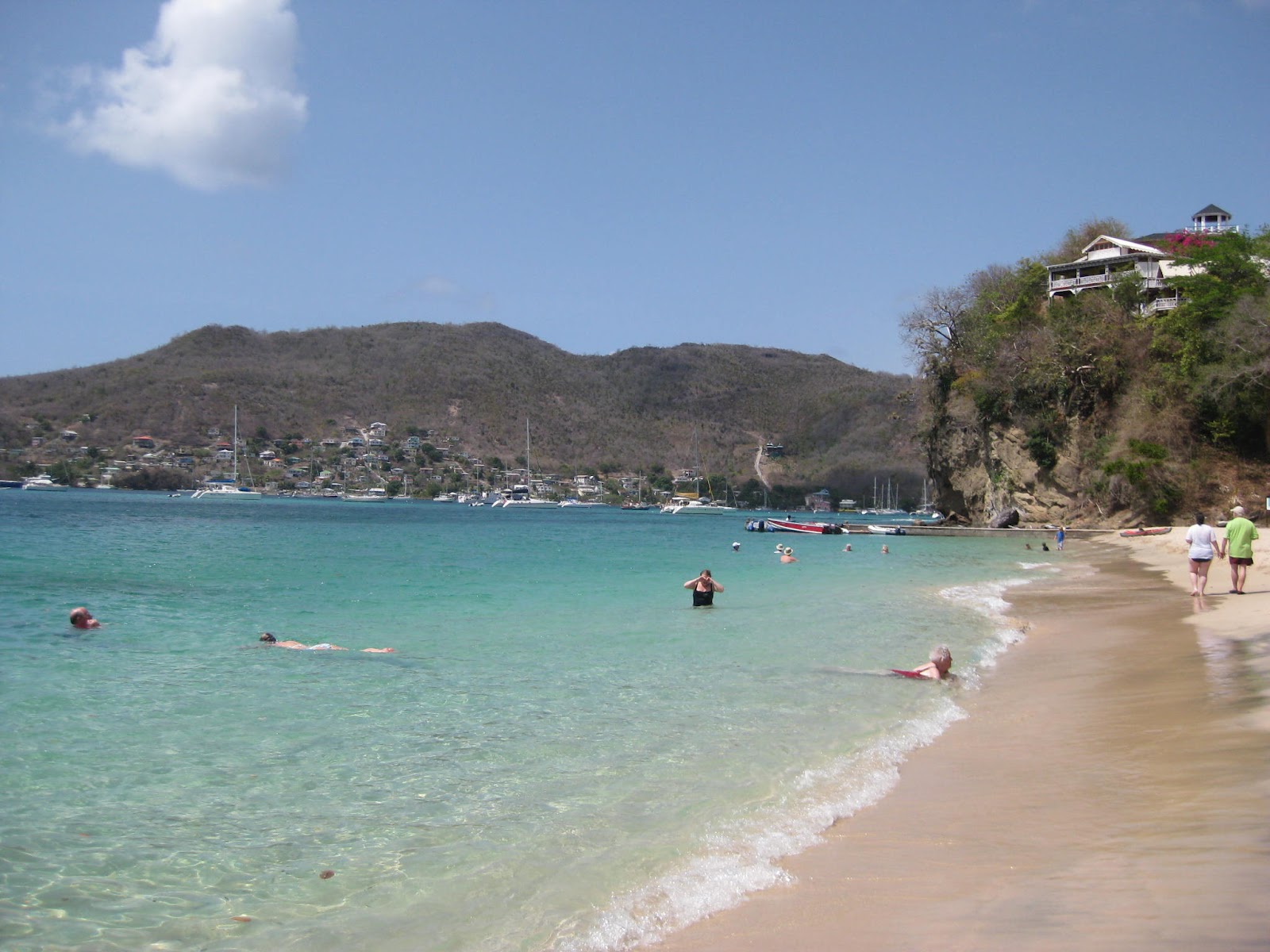
2.- Bequia, The Grenadines: Being The Grenadines one of my favorite Caribbean island regarding quality of life, beaches here are also amazing!

3.-Virgin Gorda, British Virgin Islands : Although I did not have the possibility to visit the famous Little Dix Bay, beaches around the port were also very enjoyable and postcard style 😉

4.-Philipsburg, St. Marteen : very close to the huge tax free shopping area, I did like this beach because of the sport and refreshment offer.

5.-Shell Beach (aka Crew Beach): It’s the closest beach to the tender location, and also the place where the crew member “hide” from the guest, but very lovely beach. If you climb up some colorful steps, you will get awesome views from the beach.

6.- Roatán, Honduras : Again, my photos do not reflect the beauty! One of the best snorkeling ever!

7.- Wild beaches around Castries, Santa Lucia: Far away from the tourist, took a bike and ride on my own…The views were really outstanding. Completely virgin beaches over there!

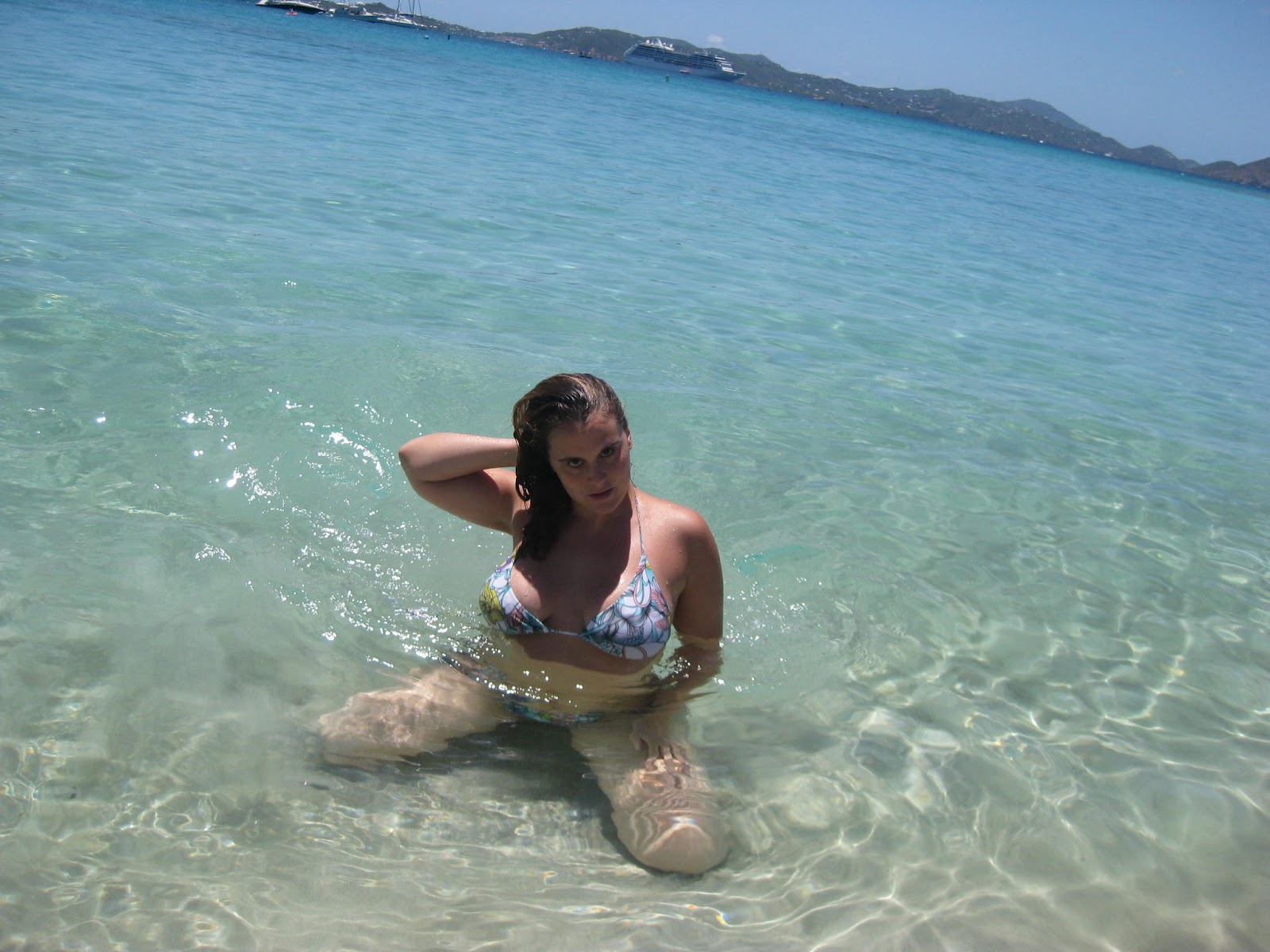
8.- Caneel Bay, USVI : Another gem, in this case with touristic resort surrounding, still with a really clear and pure water!

9.- La Gousier, Guadaloupe: For only 1€ in local bus, you can reach this lovely beach in the charmed French Guadaloupe.

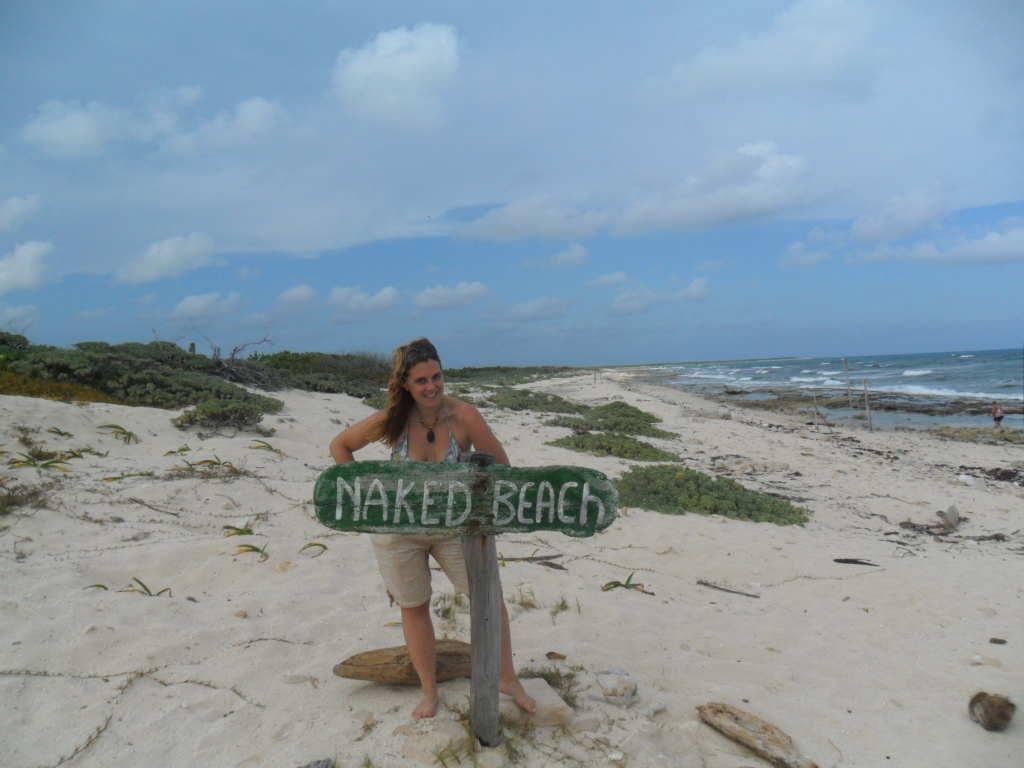
10.- Cozumel: Hard to choose one, I would rather choose the whole island!

If I get lost, look for me in any of this beaches!

Noelfy has just started her blog and she has already written about food on board ships, fruit picking around the world, ice flows in Alaska and “Lazi”
Follow her blog here http://quererysipoder.blogspot.co.uk and tell me what you think.
.

Norway – A Viking Island Kingdom

 Walking In Norway

Sakrisoya


Waterside village

I’d read as much as I could; I’d studied every website, every photograph I could find, and now here I was – peering excitedly through the window of the small plane that was flying me across the ocean to a remarkable archipelago of islands that had enthralled me ever since I’d first heard of them.Staring ahead, I soon saw what had become a familiar sight in my mind’s eye, the famous ‘Wall’, a seemingly impenetrable barrier of jagged peaks stretching from horizon to horizon, with no apparent way through, and nowhere for man to land, let alone settle and eke out an existence.

The Wall


The Wall

As I got closer, the mountains of the Wall begin to reveal their secret – they are not one solid form, but myriad islands with low-lying coastal plains and quiet valleys, separated by deep blue channels, scoured by some of the fastest-flowing currents and tides in the world. At the head of sheltered inlets, tiny villages of brightly coloured wooden houses become visible, each linked to the next by one of Europe’s most graceful roads: a silver, shimmering line that winds its way over the islands, dipping through deep tunnels and arching over elegant bridges all the way south to the tiny hamlet of Å (pronounced ‘O’).

These are the Lofoten Islands, lying off the north-west coast of Norway, way above the Arctic Circle yet basking in a surprisingly benign climate due to the influence of the Gulf Stream. Comprising nine major islands (Andøya, Hinnøya, Langøya, Hadsel, Austvagøya, Vestvagøya Flakstadøya, Moskenesøya and Vaerøya) plus hundreds of smaller islets and rocky outcrops, the Lofoten archipelago offers dramatic yet contrasting landscapes, from small coves of the finest white sand and huge boulders polished by the sea, to scattered patches of sheltered trees and open peat moorland which separates the sea from the bare rock of the high mountain peaks.

For millennia, the rolling waves of the northern ocean have pounded away at the sheer cliffs, creating low-lying shelves of land that have long been colonised by man. Since Viking times, people have lived here, making a living from the plentiful fish stocks that breed in the nutrient-rich waters. Today, fishing is still very much the mainstay of the local economy, although tourism plays an increasingly major role, too.

Drying Fish


drying fish


To walk in Norway is an honour and a privilege. The landscapes are humbling, with breathtaking views around every corner, stopping you in your tracks. Indeed, one of the hardest things about travelling through the islands is reaching your destination – you feel morally obliged to stop and stare in awe at every view that presents itself. Despite the rugged appearance of the islands, there are plenty of accessible walking routes – along the coast, through mountain passes or up into the mountains – and all are clearly marked with the bright red ‘T’ of the Norwegian Mountain Touring Association, to guide you safely to your next magnificent viewpoint.

For mountain hikes, drive south beyond the picturesque fishing villages of Hamnøy and Reine on the island of Moskenesøya and walk into the heart of the mountains following a series of crystal-clear lakes that lead you to Monkebu for spectacular views down Djupfjorden to the sea; ascend the peak of Justadtinden on Vestvagøya for far-reaching vistas over the southern islands; or walk round the rugged Brustolen headland from the port of Ballstad and climb to the airy plateau for a huge panorama south across the sea to the Norwegian mainland.

Equally exhilarating are the many walks that follow the coast beneath towering cliffs and mountainsides, which have the added advantage of offering the chance to come upon white-tailed sea eagles swooping low over the waves before lunging onto an unsuspecting fish; or to see a pod of killer whales cruising by as they orchestrate a carefully choreographed hunt for Arctic cod. Simple log bridges make access over rivers easy, as here on the coast of Flakstadøya between Napp and Sørdalen, while chains embedded in the rock aid scrambling through the boulder fields.

From the tiny hamlet of Nesland on the southern tip of Flakstadøya, a wonderful walk takes you along the shore to one of the prettiest villages in the entire archipelago, Nusfjord, a UNESCO-designated settlement of traditional red rorbu (fishermen’s stilted huts); from Eggum on Vestvagøya, follow a coastal route past one of the island’s iconic art installations, ‘The Head’, with nothing to impede your view north over the ocean (the next land mass is Greenland!); or drive to remote Fredvang and walk over the ridge to descend to the golden sands of the deserted beach at Kvalvika, where the only sound is the crashing of the waves on the shore and the screech of seagulls soaring above the pounding surf.

Kvalvika beach

This is one of those places that can rightly claim to be like nowhere else on Earth. It’s impossible to deny the staggering beauty of the landscape – such terrain simply demands to be explored on foot. What’s more, arrive in summer and you can walk all day – for this is the land of the Midnight Sun, when, for a brief period each year, the sun never sets. This year, for example, there was 24-hour-a-day sunlight between 28 May and 14 July and at all the along the western shores, you can watch the sun approach – but never reach – the distant horizon!

Author Bio

Peter Williamson is an experienced travel writer and walker, having spent the past five years as copywriter for specialist travel company, Inntravel, the Slow Holiday People. During this time he has travelled extensively throughout Europe, researching and writing route notes for the company’s self-guided walking holidays, as well as writing for Inntravel’s brochures and website. Prior to this, Peter was a freelance writer and author for many years, writing on a wide range of subjects across a wide range of industries. He has published a number of popular walking books, including ‘Castle Walks in Yorkshire’, highlighting his love of his home county; history (he has an MA in Historical Research) and, of course, walking.

~~~~~~~~~~~~~~~~~~~~~~~~~
Cliff Chapman
www.traveljunkies.com
New places to go, good value accommodation, great activities and exciting things to do.
Get a free listing in traveljunkies for your travel or activities business!

From This . . . To This . . .

From this . . .

Harley

To this . . .

Disabled Beach Buggy


Facebook post today from my friend Keith Keller of Cayman Custom Cycles . . . 

“Ok so have been away from our Facebook for a little while as we have been busy!! As a custom shop we get to play around with different motorcycles but not all our builds are to go fast… We have a friend that is wheelchair bound and wanted to be able to go into the ocean while he is here. His regular wheelchair weighs about the same as a Harley so getting it down the beach would be extremely hard to do and if it got wet would be costly. So we built the CCC Beach buggy to get him up and down the beach and in & out of the water. Can’t wait to see his face as he tries it out on Wednesday.”

Good on ya Keith

~~~~~~~~~~~~~~~~~~~~~~~~~
Cliff Chapman
www.traveljunkies.com
New places to go, good value accommodation, great activities and exciting things to do.
Get a free listing in traveljunkies for your travel or activities business!


Isn’t This Dead?

Everyone and his dog are asking us to LIKE their Facebook Page and they will LIKE us back.

What’s the point?

Is it just to grow numbers so they look good?

Don’t they realize unless they are actually contributing useful stuff we all know big numbers means they’ve just been exchanging LIKES or worse, buying them.

How many of them actually read what is posted or post something useful?

Surely Facebook Pages are there to inform, educate, learn, communicate and build relationships.

Or have I got it all wrong?

Cliff Chapman
traveljunkies

PS . . . And when will Google start penalizing list builders who contribute nothing?

A 23-year, 800,000-mile drive . . .

Gunther Holtorf’s 23-year road trip
Two hundred countries and 20 times around the planet – a man’s amazing journey in his Mercedes


http://www.bbc.co.uk/news/magazine-18910560

~~~~~~~~~~~~~~~~~~~~~~~~~
Cliff Chapman
www.traveljunkies.com
New places to go, good value accommodation, great activities and exciting things to do.
Get a free listing in traveljunkies for your travel or activities business!


Lighthouse Hotel in Scotland

Visit this beautiful and unique hotel near Stranraer in Scortland.

This very unique luxury hotel and restaurant delights everyone who has the good fortune to stay or dine here. It has the charm and romance of an 1815 functioning lighthouse with the comforts of a small very unique luxury hotel and restaurant.

Corsewall Lighthouse Hotel in the beautiful countryside of South West Scotland has the charm and romance of an 1815 functioning lighthouse with the comforts of a small very unique luxury hotel and restaurant.
Pony trekking and cycling are very popular and walkers can enjoy some of the best trails in Scotland.  For golfers, Stranraer Golf Club and Portpatrick Dunskey Golf Club are nearby, and the Championship Golf course at Turnberry is within easy reach.
Nearby Galloway Forrest Park has international Dark Sky recognition as best Astronomy location in Europe, and Bladnoch Distillery and the Book Town of Wigtown are only a short drive away.
The world famous Logan Botanical Gardens and Culzean Castle grounds and gardens run by the National Trust for Scotland, make an excellent day out, while a  day return visit to Belfast, Northern Ireland is available from Cairnryan.
Its International reputation for top quality accommodation, the award winning restaurant and spectacular coastal location make Corsewall Lighthouse Hotel an exclusive getaway for the most discerning guests

~~~~~~~~~~~~~~~~~~~~~~~~~~~~~~~~~~~~~~~~~~

Cliff Chapman
www.traveljunkies.com
Great travel deals around the world

Discover Amsterdam’s Bars & Cafes #1 – In‘t Aepjen (In The Monkey Or Ape)

This is the first of a series of extracts from Paul Clutterbuck’s book Inside Amsterdam in which he re-visits some of his old haunts.

1. In‘t Aepjen (In the Monkey or Ape)
Zeedijk 1
1012 AN Amsterdam
Tel: 020-6268401
Hours: Sun-Thurs 3pm-1am Fri-Sat 3pm-3am
Beer; Belgian draft and seasonal:
Wine; South African
Food: Dutch snacks
.

Historic, bizarre and fun

This café is housed in one of the only two wooden houses remaining in Amsterdam. The other is in the Begijnhof near the Spui. As far back as 1519 this was an inn for sailors as Zeedijk was literally the dyke keeping the sea at bay and ships would dock there or nearby. The café name comes from the 16th century when sailors would not be allowed back on board ships once docked – only an officer’s privilege – until it was time to sign up for the next pleasure cruise.

Sailors would be paid up-to-date by the Dutch East India Company and head off to spend as fast as they could on the dreaded drink, women and gambling. When it came to lodgings, this inn would sleep penniless seafarers in the roof where monkeys given in lieu of money were kept.

The monkeys had been transported from the Far East (probably Indonesia). There is still a Dutch saying used today “jij bent in de aap gelogeerd zeg” which roughly translates to sleeping with monkey’s but in modern day terms means someone who has got himself in some serious problems and needs a friend or relative to help them out.

In‘t Aepjen has an amazing array of artifacts such as the strange gorilla mannequin (note the poor attempt at a monkey) in one ceiling corner. Opposite is what looks like Lawrence of Arabia playing an accordion and making his way up the staircase. I am reliably informed that this is, in fact, the only musical mannequin in Amsterdam or at least the only broken one. The original staircase has been preserved well (no monkey scratch marks) and the high ceiling gives the feeling of being in a cathedral annex. The old and much used bentwood furniture, the rugs on the tables and the ancient looking birdcages are typical of a brown café but the refreshingly (for a change) light coloured walls aren’t.

The beautiful wooden floor is made from German beer barrels and the reason there is no sand to shuffle under your feet might be due to gaps between the boards. The sand must already be in the basement. Normally no music is played but at weekends an accordionist slips in to stare competitively at Lawrence and lead the regulars through a good old fashioned Dutch sing-a-long.
You’ll remember your visit that night.

Get your copy of Inside Amsterdam here and help kids with facial deformaties worldwide enjoy a better life.

Thank you
Cliff

~~~~~~~~~~~~~~~~~~~~~~~~~
Cliff Chapman
www.traveljunkies.com
New places to go, good value accommodation, great activities and exciting things to do.
Get a free listing in traveljunkies for your travel or activities business!


Discover Amsterdam’s Bars & Cafes, But Before You Get Started #2 . . .

Last Week I introduced you to a book about the “Boozers of Amsterdam”

htttp://www.traveljunkies.com/blog/discover-amsterdams-bars-cafes-but-before-you-get-started

This book, Inside Amsterdam, was written  a couple of years ago and brings to life the city as seen throgh the eyes of it’s legendary cafes. Stories that will captivate the reader.

In this series of articles, Paul has allowed me to reproduce some of the descriptions of these historic and fascinating cafes, enabling you to find the real Amsterdam and enjoy the difference from the run-of-the-mill city guides.

So, who is Paul and why has he written this book.


Paul Clutterbuck

Paul Clutterbuck lives in the South of England with his wife Angela and has two daughters and three grand children. He spent four years living near Amsterdam where he fell in love with the city and especially the hostelries where he soon became a regular. So much so that this month, July 2012, he is cycling around Holland with a bunch of friends, revisiting some of his old haunts.

A keen cyclist, Paul’s plan is to cycle 70 miles a day for five days taking in the countryside, but if I know Paul, the mileage is likely to be reduced and the countryside won’t extend far beyond Amsterdam’s city boundary.

So apart from the obvious, why is he doing this cycle ride at a time when the weather is very much against him?

Paul is riding for a charity he is passionate about and has supported for many years.
His sponsorship and all profits from his book are donated to Operation Smile, an organization providing reconstructive surgery across the world for children suffering from facial deformaties.

Alexandra Talbot, Executive Director of Operation Smile UK said
“Mr Clutterbuck has been a long-term and dedicated supporter of our organisation and has very kindly offered to support us again with the launch of this wonderful book detailing many magical places to visit in Amsterdam”

Like me, Richard Branson has a personal copy of Inside Amsterdam, and he wrote . .
“Paul- Congratulations! Brings back many memories!
[signed, Richard (Branson)]”

Starting next week, I’ll be publishing the first of a series of articles about the cafes that Paul has personally selected from his book.
Why not join me along the way with your own copy, knowing you’re supporting a very worthwhile charity.

Go here to get your own copy of the book or as a downloadable PDF.

And remeber to tell your family, friends, colleages and followers. You wouldn’t want them to miss out.
After all, isn’t that what Twitter and Facebook are for?

Cliff Chapman
traveljunkies