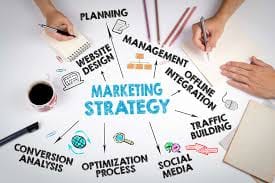
The Magic of Marketing

Marketing is all about building real connections and relationships with future customers. It’s not just about pushing products or services—it’s about getting to know your audience and creating something they genuinely care about. The magic happens when you make people feel seen and understood, rather than just being another brand trying to sell to them.


By telling stories that resonate with their needs, desires, and problems, you can create a bond that goes beyond a one-time purchase. People want to feel like a brand “gets” them, and when that happens, they’re more likely to trust you, come back, and even recommend you to others.

Think of marketing like starting a friendship. At first, it’s about showing up in the right places and sparking interest. Then, it’s about keeping the conversation going—whether that’s through great content, personalized offers, or just keeping the tone friendly and approachable. Over time, that trust grows, and you become more than just a business—you become a brand people feel connected to.

The real magic lies in making your customers feel like they’re a part of something special, not just a transaction. That’s how lasting, meaningful relationships are built, and it’s what turns future customers into loyal ones.

So if you’re sending your prospects and customers direct to your website home page, isn’t it time to build your relationship with them from your landing pages.

Better than Google – by Seth Godin

Better than Google
Seth Godin’s Blog – 15 June 2024

I haven’t done a Google search in months.

Perplexity is more powerful, more pleasant and more effective.

Instead of being corrupted by invasive ads, surveillance and sneaky dark patterns, it presents you with a simple, footnoted explanation of exactly what you’re looking for. Asked and answered.

And I like that there’s a pro version that we can pay for. This makes us the customer, not the product.

Most of all, the limited scope of the promise gives AI a chance to shine. ChatGPT often comes across as both arrogant and bumbling, because it promises that it can do everything, all at once. Perplexity is simply a smart search partner without the corrosion that racing for more ad dollars will cause. At least for now.

#Google  #Perplexity  #SethGodin

Why Referrals Matter

The Power of Referrals.

Harnessing the Power of Referrals can transform your small business into a thriving enterprise. Just think about how popular authors promote each other’s books. When a new title hits the shelves, you’ll often see glowing endorsements from fellow authors right on the cover or in the front pages. This isn’t just friendly support; it’s a savvy marketing strategy that benefits everyone involved. Each author is not only endorsing the new book but also subtly promoting their own work by highlighting their status as “best-selling authors.”
This principle extends beyond the literary world; it’s prevalent in various industries, especially in software, business courses, and training services. Successful marketers utilise this strategy effectively. By promoting others, they tap into the law of reciprocity, where kindness begets kindness. Why? Because one referral can be worth a thousand self-promotions.

How This Applies to Your Business

At Traveljunkies, we understand this dynamic well. When customers search for keywords related to your free advertisement, it acts as a referral from us to you. The more recommendations you receive, the higher the likelihood that potential customers will click through to your website.

Why Referrals Matter

  1. Build Trust: Referrals create an immediate sense of trust. When someone recommends a service or product, it carries more weight than traditional advertising.
  2. Cost-Effective Marketing: Instead of spending heavily on ads, leverage your existing customer base to generate referrals. It’s often more effective and far less expensive.
  3. Increased Customer Engagement: When you refer others, you create a network of mutual support that can lead to increased engagement and loyalty among your customer base.

Strategies for Encouraging Referrals

  • Ask for Referrals: Don’t shy away from asking satisfied customers for referrals. A simple request can yield great results.
  • Offer Incentives: Consider providing discounts or freebies to customers who refer others to your business.
  • Show Appreciation: Always thank those who refer others to you; a little gratitude goes a long way in nurturing relationships.

By embracing the power of referrals and reciprocity, you can create a thriving ecosystem around your small business that not only attracts new customers but also fosters loyalty among existing ones. Remember, in the world of business, giving often leads to receiving—so start building those connections today!

Cliff Chapman
Traveljunkies

Do You Know Where Your Customers Came From?

Your prospects.

I’m pretty sure you have a good grasp of your business numbers, especially the important ones.
But do you know where your customers originally came from and how they found you?

They may say they found you from a Google search, or a blog post, or an advertisement but few will remember if they originally found your website from your free advert in Traveljunkies.
And with so much to choose from, they could easily forget which advert they actually clicked on.

We track all the visitors to our website and we count every one who clicks through to our customer’s websites, so we know how many we have referred to your website.
In the whole scheme of things it won’t be anywhere near the millions of casual clicks that fly across the Internet every minute but the big difference is that our visitors know and trust our recommendations and are happy to check you out.

A referral from Traveljunkies carries a lot of weight.
And even better than other search engines, a search for any word in your free advert (freead) will always find you. Remember that the content of your freead including your important tagline, determines who gets found.

But this is only half the story

From your side, where you send your visitors is important for your marketing and building a relationship with your prospective customer. A Landing Page designed for your visitors can be critical if your Home Page is designed for selling.

Studies have shown that only 3% of prospects are ready to buy now, so there’s around 97% who have shown an interest in what you offer and are potential customers for the future.
You will have heard advice on building your list so are you collecting their information for your future marketing?

Looking ahead, with the growing use and capabilities of Artificial Intelligence (AI), it’s hard to anticipate how things will develop so we should all expect a lot more changes.
Together with the effects of climate change and the increasing focus on sustainability, this makes the future of travel interesting and exciting for small businesses.

If you have any more ideas you would like to share with us, please don’t hesitate.
We are always on the lookout for ways we can help small adventure, travel and hospitality businesses.

With our very best wishes.
Cliff & the Traveljunkies Team

PS.  In the year end report to our subscribers we will report how many click throughs from our website we have recorded, none of which has cost them anything.


Advertising is Boring, Marketing is Fun

What’s the difference between advertising and marketing and why is advertising boring & marketing fun?

Advertising and marketing are often used interchangeably, but they are distinct concepts with different purposes.

o  Advertising is the act of promoting or advertising a product, service, or brand through various media channels to persuade and influence consumers to buy or use it.
o  Marketing encompasses a broader range of activities aimed at understanding, anticipating, and meeting customer needs, ultimately resulting in the sale of a product or service.

o  Advertising focuses primarily on promoting and selling products or services to consumers.

White BMW for sale


o  Marketing is more focused on understanding and addressing the needs, preferences, and behaviours of customers. This can include advertising but also encompasses other activities like market research, product development, customer service, and sales.

Happy customer having bought a new BMW


o  Advertising is a subset of marketing that specifically deals with promotional activities and paid communication channels aimed solely at making sales.
o  Marketing encompasses the entire customer journey, from identifying customer needs and building brand awareness to creating, promoting, and delivering products or services that meet those needs.

o  Advertising activities include creating ad copy, designing visuals, selecting media channels, and managing ad campaigns.
o  Marketing activities include market research, customer segmentation, brand development, product design, pricing strategies, distribution management, and most importantly, customer service.

o  The primary objective of advertising is to persuade consumers to make a purchase or take a specific action, such as visiting a website or making a phone call.
o  The objective of marketing is to build and maintain relationships with customers, foster brand loyalty, and ultimately drive sales and business growth over the long term.

So why is advertising boring?

Repetition: Many advertisements are repetitive, with the same messages being pushed over and over again. This can make them predictable and uninteresting.

Lack of originality: A significant portion of advertisements follow similar templates and styles, failing to make them look any different from everyone else.

Targeted towards a broad audience: Advertisers often aim to appeal to the largest possible audience, which can result in generic, bland messaging that fails to resonate with individuals’ interests and preferences.

Invasive and interruptive: Traditional advertising methods, such as TV commercials, billboard ads and pop-ups, can feel intrusive and disruptive leading to a lack of interest.

Failure to address real problems: Advertisements often focus on selling products rather than  on what customers want or providing solutions to problems.

Superficiality: Many advertisements prioritize aesthetics and glitz over substance, leading to an appearance-focused message that may feel superficial and just salesy.

Lack of personal connection: Advertisements often depict idealized situations or people, creating a disconnect between the advertisement and the viewer’s own life, making it difficult to relate and engage with the customer.

However, there are exceptions to these rules, and some advertisements can be innovative, engaging, and memorable. The key is to create advertising that resonates with the target audience, provides value, and stands out from the mass of generic, repetitive messaging.

And why is marketing fun?

Creativity: Marketing often involves developing innovative ideas, campaigns, and strategies that can be both challenging and enjoyable, especially when working with a creative team.

Problem-solving: Marketers need to identify and address their target audience’s needs, which requires critical thinking and problem-solving skills – activities that can be mentally stimulating and rewarding.

Challenging yourself: Marketing campaigns can be highly competitive, and achieving success can provide a sense of accomplishment and satisfaction.

Constant learning: The field of marketing is constantly evolving, with new technologies, platforms, and consumer behaviors emerging regularly. This can make the work exciting and provide opportunities for continuous learning and growth.

Collaboration: Marketing often involves working with cross-functional teams, including designers, developers, and content creators, which can lead to fun and engaging team dynamics.

Experimentation: Marketers can test various approaches and strategies, learn from their successes and failures, and continuously refine their efforts – a process that can be both challenging and enjoyable.

Creative expression: Marketing provides a platform for expressing ideas, stories, and messages in unique and engaging ways, allowing individuals to showcase their creative talents.

Sense of purpose: Effective marketing can have a positive impact on both businesses and consumers, making the work feel fulfilling and worthwhile.

So to summarise …
Your website is your advertising designed to display and sell your products.
Your landing pages are your marketing aimed at attracting customers.  

Cliff Chapman
Traveljunkies – Adventure Travel Directory
#tjfreeads

Advertising is Expensive

Advertising can seem incredibly expensive, especially for small businesses working with tight budgets, so what’s behind these high costs?

For one, advertising platforms like TV, radio, and digital media have a wide reach which means premium pricing. The more people you want to reach, the more you pay, and high demand for advertising slots, especially during peak times or events, pushes prices even higher.
And professional magazines have high production costs and pay high prices for top quality designers and marketers to produce high quality adverts.

But small businesses needn’t feel overwhelmed.

Most important is to ensure your messages reach the right people. Focus on your target market to avoid unnecessary costs and don’t waste money trying to be everything to everybody.
Established methods such as partnering with local businesses, posting newsletters and advertising in local publications still work well for many small businesses, and referrals continue to be the most effective way of getting new customers.

But it’s clear by now that the introduction of Artificial Intelligence (AI) has dramatically changed the game.

Digital advertising offers budget-friendly options with measurable results that can easily be tracked. Social media platforms enable you to do your own marketing and advertising to your your preferred audience and control what you spend to reach them.
But now, with the ever increasing capabilities of AI, it’s not beyond many small businesses to create their own adverts suitable for the most popular social media channels.
Even if you think this is outside your capabilities or that it will take your valuable time away from running your business, there is an ever increasing list of entrepreneurs setting up small businesses offering to help. Just be careful who you choose and what you commit to.

As things change it’s vital to keep up with what works for you without chasing the flood of shiny new objects that will inevitably hit your inbox.
Make use of free trials if you have the time but make sure that at the end of the trial you’re not automatically converted into a monthly paid membership. If this happens, quickly unsubscribe.

Let me tell you a little bit about us.

We are Traveljunkies, a small, family run marketing agency, where we display small 3 line adverts, for free, in our online directory. Remember the free Yellow Pages book? It’s a bit like that.
Yes, it’s completely free for and it’s for as long as you want.

So, if you are the owner or manager of a small travel, tourism or hospitality business and you’d like to know more, please head over to www.traveljunkies.com to see how it works and what’s in it for you.

I look forward to welcoming you to Traveljunkies.

Cliff Chapman
Traveljunkies 

# advertising  #marketing  #expensive  #free  #traveljunkies

TravelJunkies

Travel Junkies seeking eco-friendly & sustainable adventures & accommodation.


Benefits of Global Warming

Global warming is a term often suggesting doom, but there are plenty of upsides for many small businesses.
And while doomsayers talk about a climate catastrophe, shifts in climate patterns can create unique opportunities for small businesses to innovate, adapt, and thrive.

One of the most direct benefits is the extension of growing seasons in colder climates. Businesses in the agricultural sector, especially in regions previously limited by shorter seasons, will be able to extend their growing seasons to increase their yield. This longer growing period will enable farmers to experiment with crops traditionally unsuited to their regions, opening up new markets. For instance, as the climate warms up vineyards in northern latitudes, like the United Kingdom, have already begun producing wines that are competing on a global scale, and there’s an ambitious program to grow the wine business in the UK and take on new markets.


Similarly, the melting of ice in the Arctic is opening new shipping routes, such as the Northern Sea Route, which can significantly reduce transit times and costs between Europe and Asia. This can be a boon for small businesses involved in international trade. The reduced travel distance cuts down on fuel costs and time, allowing businesses to move products more quickly and efficiently increasing their competitiveness in the global market.

For small businesses in the travel and tourism industries, warmer temperatures and milder winters can extend the tourist season in traditionally cold regions. Small businesses such as hotels, restaurants, and tour operators can capitalize on this by offering additional experiences throughout the year. A region known for winter sports can now also attract visitors for summer hikes and wildlife tours as well as additional activities such as cycling and water sports. This diversification not only increases income but also helps against the unpredictability of the weather.


On a global front, the increasing frequency of extreme weather events has heightened awareness and concern about climate change, driving consumer behavior towards sustainability. This trend presents small businesses with the opportunity to innovate by developing green products and services. Companies that focus on renewable energy, sustainable agriculture, and eco-friendly products can find a growing market ready to support their efforts. This shift not only benefits the planet but can also result in cost savings and new revenue streams for small businesses as they adapt to these new market demands.

Additionally, the push for sustainable practices has led to a rise in government incentives and funding for small businesses that implement eco-friendly operations. Grants, tax breaks, and subsidies are becoming increasingly available to support small businesses that reduce their carbon footprint, install renewable energy systems, or enhance their supply chain sustainability. These financial incentives can lower operational costs and provide a competitive edge.


Global warming has already spurred innovation in areas such as disaster management and climate resilience. Small businesses specializing in these fields are experiencing a surge in demand as communities and industries seek to protect themselves from the adverse effects of climate change. These businesses are not only providing valuable services but are also becoming essential components of future communities.

While global warming poses significant challenges, it also presents wide opportunities for small businesses. By adapting to changing conditions, focusing on sustainability and innovation and capitalizing on new markets, small businesses can not only survive but thrive in a warmer world.

So … Small Business Owners in the travel, tourism and hospitality sectors, please join us at www.traveljunkies.com and let us help you grow your business.
It’s free.

Thank you
Cliff Chapman

 TravelJunkies

Travel Junkies seeking eco-friendly & sustainable adventures & accommodation.

#traveljunkies  #customers  #referrals  #marketing