How To Make Your Adverts Work Better

“When things are good you should advertise, when things aren’t good you MUST advertise.”

Advertise your website, not your services or products. 

Traffic is the lifeblood of your website, without traffic your site is dead.
If no-one sees it, it might just as well not exist.

  • To attract visitors to your website, advertise your website not your services or products.
  • Your website does your selling so don’t make the mistake of making your adverts a mini version of your website.

[more …]

Include a wide range of keywords and key phrases in your adverts.

  • As well as the keywords for your own business, think wider. Include key words and phrases people might use when they aren’t specifically looking for you.
  • For example, if you provide accommodation, include words for nearby attractions and activities. People searching for tours, scuba diving, sightseeing etc. will often need somewhere to stay so use these kind of keywords in your adverts,

Be friendly, helpful and contactable.

Make it easy for people to get in touch with you. Many adverts fail because they’re not user friendly or don’t tell visitors what to do next.

  • Don’t forget your Call To Action. Tell people what to do.
  • Include your name and contact details and encourage people to contact you.
  • Keep adverts short and to the point as many are read on mobile devices.

Use Social Media to promote your business – it’s free.

  • Always include links to your social media sites in your advertising and emails.
  • Link to Facebook, Twitter, Pinit and Linkedin. These four cover the widest range of prospects.
  • Limit it to four. More than four can look like spamming.
  • Promote your Blog in the same way you advertise your website. Then use your Blog to promote your website.

Make sure they’re mobile friendly

See more – http://www.traveljunkiesblog.com/mobile-friendly/

One more thing …

If your advertising isn’t working, stop doing it. Do something else.
You run your business to make money so find out how, where and when to advertise to get the best value for your money.

Cliff Chapman
traveljunkies

Why You Need Travel Insurance …


travel insurance

Are you looking to save money on your travel costs?

Have you thought about cutting down, or even cutting out your travel insurance? Are you looking for cheap travel insurance? Before you do anything else, do yourself a favour and read this.

Why you need travel insurance.

When planning a vacation or business trip, travel insurance is often one of the last things you think about, if at all, yet it’s one of the most important things to ensure your trip is stress free.

You carefully plan your holiday making sure you get exactly what you want and the best deal.
But what if things go wrong? You never know what might happen.

At home you have a pretty good idea how things work, what risks you can take and where to get help when you need it. But when you travel, it’s quite different. Especially if you’re traveling abroad but even when traveling in your own country. You don’t know what kind of unexpected setbacks could affect you and your family while you’re away.

Here’s what to protect yourself against if you’re to have a safe, enjoyable and stress free trip.

1. Things do go missing, get lost or stolen

2. You can have an accident or become ill and need medical attention. And make sure your children are properly covered. It’s very easy for children to have an accident and need medical care.

travel insurance 1


.

3. Your travel arrangements can get changed or cancelled.

4. Travel companies do go out of busines

5. Bad weather can affect your plans. Recent events across the world, floods, storms, cyclones, earthquakes etc have affected thousands of people’s plans resulting in additional travel costs, extra accommodation etc.

6. You may incur legal expenses

7. Things can go wrong back home and you may need to return early

8. Medical attention and dental treatment can cost a lot more abroad than they do at home, especially in the United States.

9. You may need foreign help, with language or legal situations.

10. You may need to change your plans for many different reasons.

11. The world is unstable today with terrorist threats and actions, and countries and regions do become unsafe.

12. Hired equipment such as skis, snowboards, surfboards etc do get broken.

13. Luggage does get damaged or gets lost on flights

14. Family illness etc can prevent you going on holiday or to return early.

15. If you run your own business and can’t return, who will run it for you?

16. And finally, the thing no-one likes to talk about, what happens if you or member of your family is injured or even dies?.

Your travel insurance will give you peace of mind that if anything goes wrong, you have the protection and help you need.

Never travel without it.

Cliff Chapman
traveljunkies

Why People Buy From You

Or rather – Why they don’t

Why

It’s mainly because most of the time we’ve got it wrong.

  • Why are Apple so successful
  • Why did the Wright brothers beat the competition for man-powered flight?
  • Why did a quarter of a million people turn up to Martin Luther King’s speech?
  • Why do some things succeed and others fail, and it’s nothing to do with function, features, benefits or price.

There’s one simple explanation. See it here

16 million people have viewed this.

Cliff Chapman
www.traveljunkies.com

China To Take Over Hotels Worldwide?

China HotelThe world has to be prepared for more guests from China: last year 109 million travelled abroad, mostly to Hong Kong, South Korea and Thailand – and to Europe. In the past four years the number of Chinese guests increased by almost one hundred percent on the Old Continent..

Read more …  http://www.travelandtourworld.com/news/article/will-the-chinese-conquer-the-hotel-industry-worldwide/

Big Businesses Putting On The Squeeze

In a recent survey of more than 3000 small businesses in the leisure industry we asked the question …

What are the two or three things that concern you most in your business?

Not really surprisingly two of the top three were about customers namely …

  • Not enough customers
  • Not a regular supply of customers
  • Not enough time to do everything

These were followed by many comments about cash flow, recruiting and keeping staff and the cost of advertising.

But a number of replies were concerned about the way big businesses use their size, budgets and influence to put the squeeze on small businesses.

So is competion fair?

Big v small 1


One of the replies was from Nick Marshall who with his wife Lizzie has been running holiday rentals for nearly 25 years and owns Cairns Holiday Homes in North Queensland Australia.

Nick has seen lots of changes in this time and none moreso than the effect the Internet has had on his business and no doubt on many other small businesses

Here’s what he had to say..

Dear Cliff.

Thank you for the feedback regarding the effect of large corporate interests taking a huge bite out of holiday rentals for doing little more than listing properties.
This was bound to happen. The internet, in its early days at least, offered a far cheaper method for small businesses to potentially be seen. The only way that small business could advertise in the mass media was through the traditional media of the press, radio and tv. For most of us that meant small ads in the classified columns or, at much greater cost, taking out an ad in the weekend travel pages of a national newspaper. 
Twenty five years ago that was costing me nearly A$300 per week. In Australia the “rivers of gold” as the Fairfax newspaper group’s weekend advertising columns were known was decimated by the swing to the internet and the rise of eBay and many other alternatives. Not surprisingly they took action and bought a site called Ozstays which became Stayz. 
That site had been started as a listing site for holiday homes and apartments in 2001 but soon started listing hotels, motels and resorts – probably because the founders realised that the more listings they had, the more they could sell the site for. Stayz was purchased by Fairfax for about $12 million in 2005 and then sold to Homeaway for around A$220 but that included more than A$150 million of debt. Even so, it was a very good return on investment. Homeaway, which has grown by a string of worldwide takeovers, was after the 50,000 odd listings and gross margin that exceeded 56% in 2012.
None of this should surprise but I really do not see how these very large businesses can survive with their present business model. They are all actively trying to separate the supplier from the customer until after the booking has been made. 
Unfortunately, the majority of holiday homes do not have a brand name (such as a hotel might have). Customers are taking a real risk when they book a home without the opportunity to talk to the managers or the owners. 
The large sites like Homeaway, those operating under its name and AirBnB are expecting the public to trust their own brand name. Unfortunately, problems are happening ( trashing of properties, theft, prostitution etc) because none of these corporate sites are able to check out their clients. Flipkey is, I think, in a slightly better position because of its association with TripAdvisor which is the giant in customer feedback for all things to do with holidays.
Sure, these large listing sites do now attempt to verify ownership but their whole model is based on the owner or manager providing all the details of the property (copy, photographs, calendar data) when they list. 
Homeaway recently passed 1 million listings worldwide and AirBnB has around 600 thousand listings.
With the amount of debt these corporations are carrying, there is no way that they can support their customers by providing a service that answers questions about individual properties. By preventing the pre-booking connection between the customer and the owner or manager, they are essentially saying  “Trust Us!”
I do not think this will work because trust is breaking down everywhere at the moment. This provides an enormous opportunity for home owners and managers to get off their butts and build their own websites which will better serve their customers. 
Of course, it is very hard to have a one property site which is going to be seen because the gateway is Google and there are only so many page one spots. Having said that, there are still many home owners who are not making use of Google Local for Business to be seen. 
Property owners have to get together with other property owners in the same region or even the same suburb in large cities. Some areas already have well run websites specialising in that area. Support them.
Getting a good domain name is not as hard as it might seem. A name containing the name of the suburb, the village, the town, the region or sub-region or region is often available. Building a wordpress website is the easiest and least costly part. The hard bit is keeping the website updated and running an interesting, relevant and useful blog on the site to build up authority. 
It is hard work and very time consuming. The days of list and forget are over – unless an owner wants to spend thousands more for elevated listing positions. It takes commitment and contribution by the owners to make it work.
Those who don’t take the plunge now will be lost in the listings. There is a wealth of good advice on the web – Matt Landau and Heather Bayer for example. This subject was touched on at the  Vacation Rental World Summit this year. The cost of the webinar recordings is a small price to pay for the great advice offered.
The web is about doing it yourself rather than expecting others to do it for you.
Yours sincerely,
Nick Marshall
.
Some pretty insightful words from Nick not only about the effect of large businesses but also about the difficulties businesses of all sizes face in the rental property market, and some advice to owners and future owners of rental properties.
.
We also heard from Christopher de Hrussoczy-Wirth, Kitsilano Cottage, Vancouver, Canada who sees the financial clout big businesses have on the industry and how they infliuence local government, and from Uwe-Dorte Bockwoldt of Tyll’s Dive, Roatan, Honduras who says that much of the solution is in their own hands.
.
Christopher wrote … 
.
First would definitely be the incursion by big captial into the highly successful realm of residential based accommodations industry. The folks behind the vast infusion of capital into the directory listing and booking parts of our industry are ill suited to support and cater to the actual needs of what started out as a bunch of Mom & Pop operations. We really don’t want or need corporate types telling us how to run our businesses. Yet their deep pockets have given them a strangle hold on a segment of the accommodations industry that is now being victimized by its success.

Another concern that is escalating is the prospect of increasing local government regulations, mostly being driven by major hotels who see our industry as a threat to their bottom line.

——————————–

Uwe-Dorte wrote … 
.
Hi Cliff
Have enjoyed your tips and hints.
The travel and tourism industry is very competitive and as small businesses we are invariably stretched for time and in many cases don’t have the necessary skills to compete with bigger businesses.
As a very small business, The ups and downs during the year can be concerning. We are aiming to get a a more steady flow again. 
We do not need to be crazy busy, but need steadiness. We are building it up getting more and more repeat divers. 
We are sliding down our rank in Tripadvisor. We do encourage new divers to make a review. But having so many repeat divers coming several times a year for years, it is hard to expect them to continue putting on reviews after each visit. The bigger shops have bigger turnover and many more people writing reviews.
Am afraid I am not promoting what we do good enough.
.
So many thanks to Nick, Christopher and Uwe-Dorte for their feedback and to the many otheres who took time to reply to us.  It is very much appreciated.
.
Cliff Chapman
.
If your businesses is being affected by “Big Business Practices” then we would love to hear from you.
.
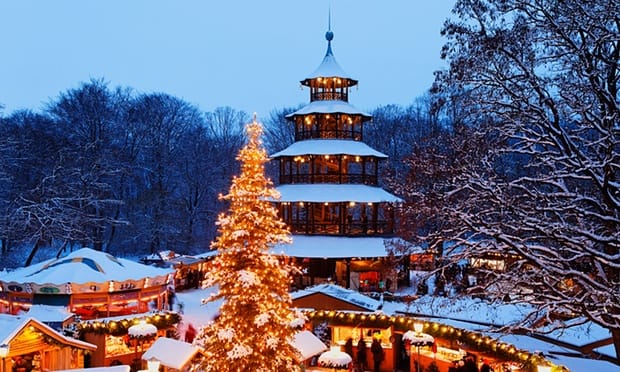
*** MUNICH CITY GUIDE ***

What to see, plus the best bars, hotels and restaurants

Outside Oktoberfest, the Bavarian capital is a graceful city – green in summer, atmospheric in winter, and buzzing with great museums and bars year round.

Munich


WHAT TO SEE

WHERE TO EAT

WHERE TO DRINK

WHERE TO STAY

Read more ..
http://www.theguardian.com/travel/2015/nov/07/munich-city-guide-bars-restaurants-hotels-germany

And for links to great places to visit, where to stay and what to do visit us at traveljunkies.com 

Affordable Places To Live in Europe

Not Just For Retirement, These Are Great Places To Live …  

Europe’s Top 5 Affordable Retirement Havens


Imagine the smell of freshly-baked croissants wafting through the air, or the satisfying swallow of wine made from grapes grown just down the road. Perhaps you muse about living on a sun-drenched Mediterranean beach or tucked down a cobbled lane savoring the cosmopolitan delights of a history-rich city…

A retirement in Europe is a dream for many folks. And it can easily be a reality. If it’s culture, history, and variety you’re after, Europe has it all, and at a cost much lower than you may think… Over the next few pages we explore the five best low-cost options for enjoying your perfect European retirement.

Each of these countries contradicts the dated view of Europe as a continent for the wealthy retiree

Read more

France: Pleasantly Affordable, Great Quality of Life

By Barbara Diggs

10366990034_507d7f5aaa_m

You didn’t expect France to be on this list, did you? Many people can never believe the land that gave the world the likes of Versailles, Chanel, and the term haute cuisine could be anything other than prohibitively expensive.

Don’t let France’s glittering reputation blind you. France is a wealthy, First-World country, but the average French person only makes about $30,000 per year. Outside of high-glamor zones like Paris, Provence, and the sun-soaked towns of the Riviera, the cost of living and real estate can be surprisingly reasonable…yet the quality of life remains very high.

Read more

Spain: Sunny, Affordable European Living

By Glynna Prentice

14831985904_ce90baeecc_m

Warm, sunny days by the glittering Mediterranean, cool nights at an outdoor café, lingering over dinner until the wee hours, mouthwatering paella, mounds of fresh seafood, succulent roast lamb (and flavorful wines to accompany them), rich, ancient culture, hilltop castles, and vast stretches of countryside just made for hiking and cycling. Spain invites you to wax lyrical over its many charms and its laidback lifestyle. Here, having fun is expected and hanging out is an art.

And these days, that appealing lifestyle is very affordable. Spain has long been one of the least-expensive countries in Europe. And today, with real estate prices at their lowest in decades and the euro weaker than it’s been in years, Spain is a downright bargain, whether you’re looking to live here full- or part-time.

Read more

Malta: The Best of European Island Life

By Gigi Griffis

16235012907_2c07ee2d94_m

Ask any expat why they upped sticks to relocate to the tiny Mediterranean island nation of Malta (all 122 square miles of it—not a whole lot bigger than Nantucket) and the same three reasons keep cropping up: sea, sunshine, and the friendly and welcoming population of English-speaking locals. I encountered all three in abundance on my journeys through this captivating island chain. And having traveled throughout Europe, I can honestly say that Malta fits the bill for an ideal retirement destination.

In Malta, you’ll find abundant sunshine even at the height of winter. Valletta, the nation’s scenic capital and adorned with historic buildings, is renowned as the warmest capital in Europe—and with less than 7,000 inhabitants, a highly manageable one, at that. Even in January, you’ll still find temperatures in the 60s F, rising to the 80s F during the glorious summer months.

Read more

Italy: A Passion for Apulia

By Steenie Harvey

16020044127_27f039240d_m

It’s understandable why many Americans regard Italy as expensive. I would, too, if I’d ever been foolish enough to pay $20 for an ice cream near Rome’s Trevi fountain or take a $120 gondola ride in Venice.

Thankfully, I spend far more time outside “tourist Italy” than in it.

Venture beyond the country’s big-ticket destinations, and you’ll likely be amazed at how inexpensive it can be. It’s not a case of compromise either—just like art treasures, history, and luscious landscapes, good living is everywhere.

Leaving aside hotspots like Capri and Sorrento, the farther south you go, the more prices fall. A quick example: The average monthly rent for a one-bedroom apartment in Milan is $1,000 and in Florence it’s $700. But in Lecce, a flamboyantly baroque city in the Apulia region of Italy’s deep south, it’s $436.

Read more

Portugal: The Last Bastion of True Old World Living

By Eoin Bassett

17011273481_d69a764c13_m

Ask your average European to describe England, Italy, or France and they will have an answer—even if they have never been. But beyond its southern beach towns and the elegant old capital of Lisbon, Portugal will have them stumped.

Few folks—not even the neighbors—have a clear picture of this small country. It’s Iberian but not Spanish. It nowhere touches the Mediterranean Sea yet it is in ways Mediterranean.

It’s small—no bigger than Indiana—but diverse, with each region distinct. You’ll spend the afternoon eating lamb in a mountain hamlet where wood smoke wafts from ancient stone homes, and that same evening dine on fresh fish on a sandy Atlantic beach.

Read more

Many thanks to International Living Magazine